
Water Pump, Thermostat, Radiator, Coolant Leak & Overheating Diagnosis
BMW Cooling System Repair
A Healthy Cooling System Protects Engine Performance, Reliability, and Long-Term Driving Enjoyment
BMW cooling systems are critical to engine performance and long-term reliability.
When a water pump, thermostat, radiator, hose, or expansion tank fails, your BMW can overheat quickly and enter limp mode.
At CG Motorsports, we diagnose and repair BMW cooling system issues using brand-specific knowledge, proper testing, and the correct repair procedures.
Whether your BMW has an overheating warning, coolant leak, rising temperature, or failing electric water pump, our team can help identify the issue before it leads to major and expensive engine damage.
Quick Cooling System Service Overview
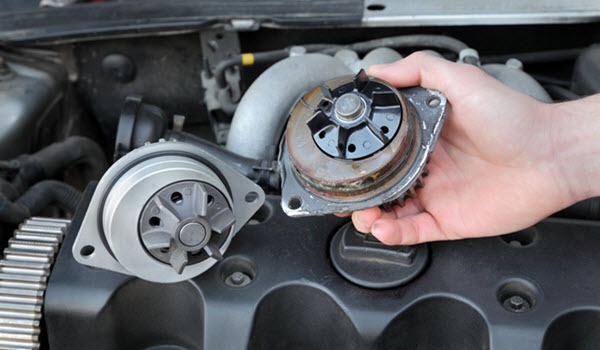
BMW Water Pump Replacement
BMW electric water pump failure is one of the most common cooling system issues on many modern BMW engines, such as the commonly used B46 and B58.
Unlike traditional belt-driven water pumps, many BMW models use electric water pumps to circulate coolant through the engine. When the pump begins to fail, coolant may stop circulating properly, causing the engine temperature to rise quickly.
Common signs of BMW water pump failure include:
🔷 Overheating warning on the dashboard
🔷 Engine entering limp mode
🔷 Cooling fan running loudly or constantly
🔷 Temperature rising while driving
🔷 Coolant level normal, but engine still overheating
🔷 Fault codes related to water pump performance
If the water pump stops working, the vehicle should not be driven. Continuing to drive an overheating BMW can cause serious engine damage.
💡 Pro Tip: Learn how to recognize the warning signs with our guide to BMW electric water pump failure symptoms.
BMW Thermostat Replacement
The thermostat controls coolant flow and helps regulate engine temperature. In many newer BMW models equipped with B46 and B58 engines, the thermostat function is integrated into the heat control module (thermal management module).
When a BMW thermostat fails, it may become stuck open or stuck closed. A thermostat stuck closed can cause overheating, while a thermostat stuck open may prevent the engine from reaching proper operating temperature.
A failing thermostat may cause:
In many cases, the water pump, heat control module, and thermostat are inspected together because these components work closely together within the cooling system.
💡 Pro Tip: Learn how to recognize the warning signs with our guide to BMW thermostat failure symptoms.
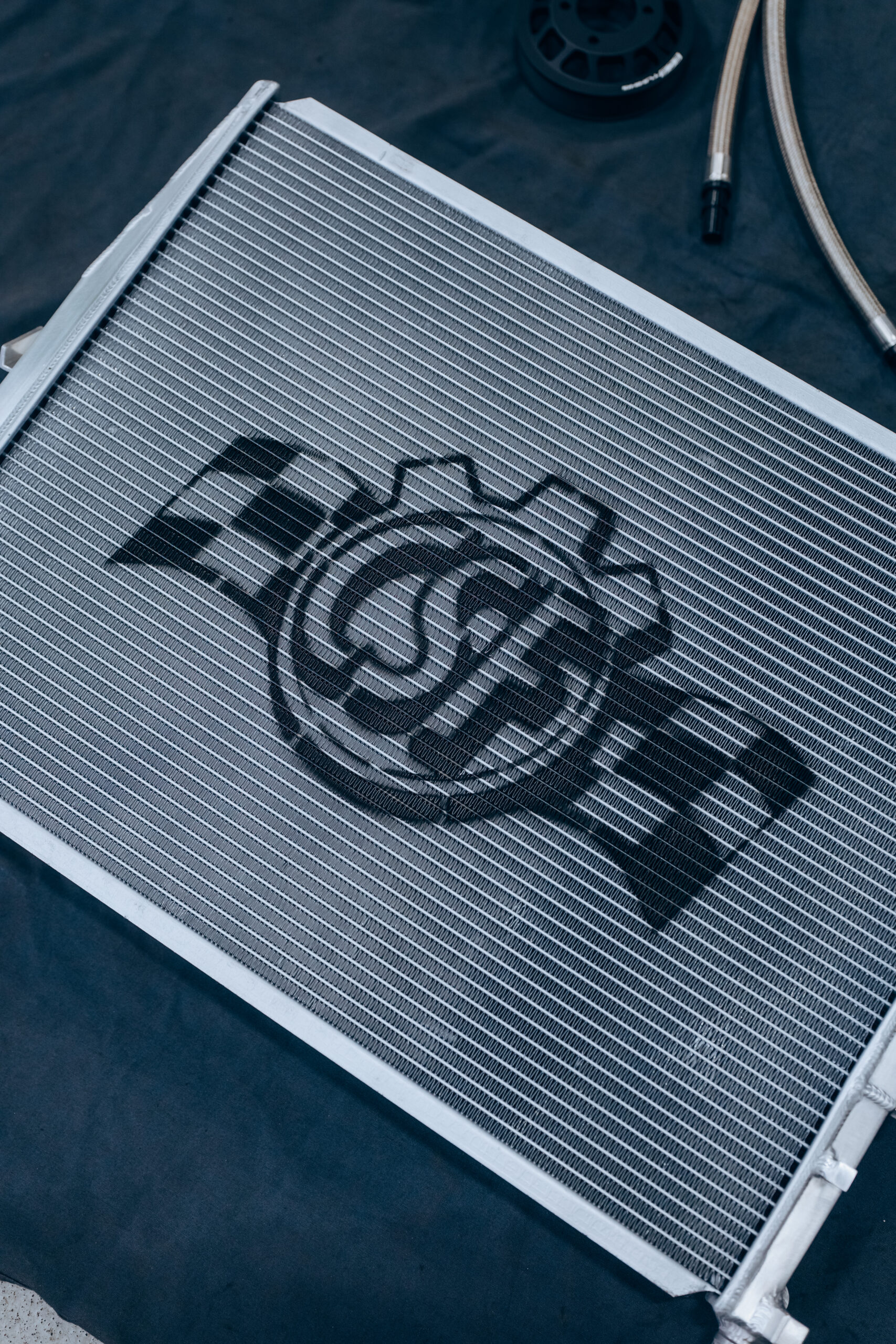
Radiator Repair & Replacement
The radiator helps remove heat from the coolant before it circulates back through the engine.
Over time, radiators can develop leaks, clogging, damage, or reduced cooling efficiency. This can lead to coolant loss, overheating, or recurring temperature issues.
Radiator issues may include:
🔷 Coolant leaking from the front of the vehicle
🔷 Visible cracks or corrosion
🔷 Coolant smell after driving
🔷 Low coolant warning
🔷 Overheating during traffic or hot weather
🔷 Reduced cooling performance
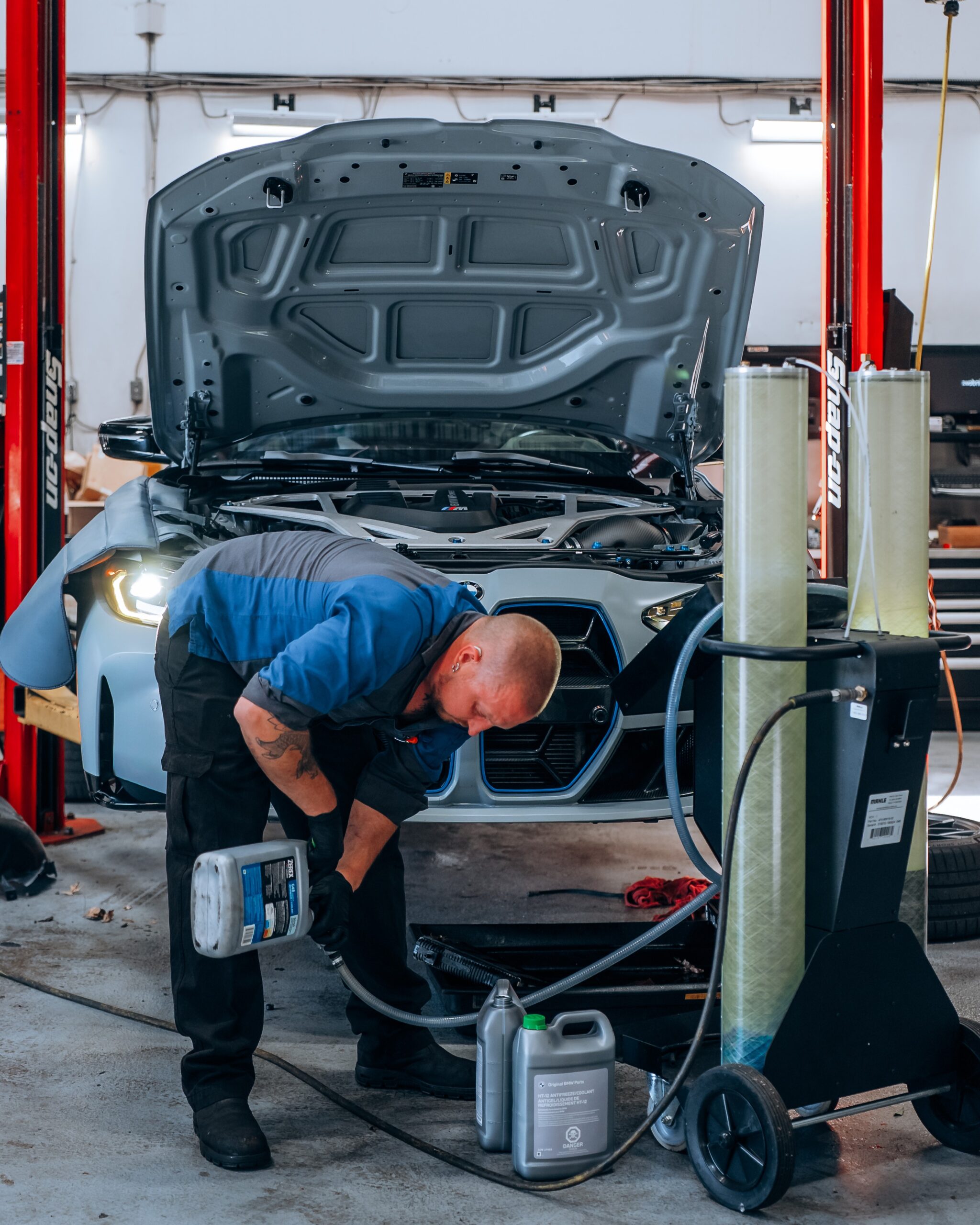
At CG Motorsports, we inspect the radiator, hoses, cooling fan operation, and related components to confirm the true cause of the issue.
Coolant Leak Diagnosis
BMW coolant leaks can come from several areas, and not every leak is obvious.
Common coolant leak sources include:
🔷 Coolant hoses
🔷 Expansion tank
🔷 Radiator
🔷 Water pump
🔷 Thermostat housing
🔷 Coolant reservoir cap
🔷 Heater hoses
🔷 Plastic fittings and connectors
Ignoring a small coolant leak can result in a major overheating problem. If you notice coolant under the vehicle, a sweet smell, a low coolant warning, or repeated top-ups, the cooling system should be inspected.
💡Pro Tip: Review our guide to BMW coolant leak symptoms to catch potential issues early.
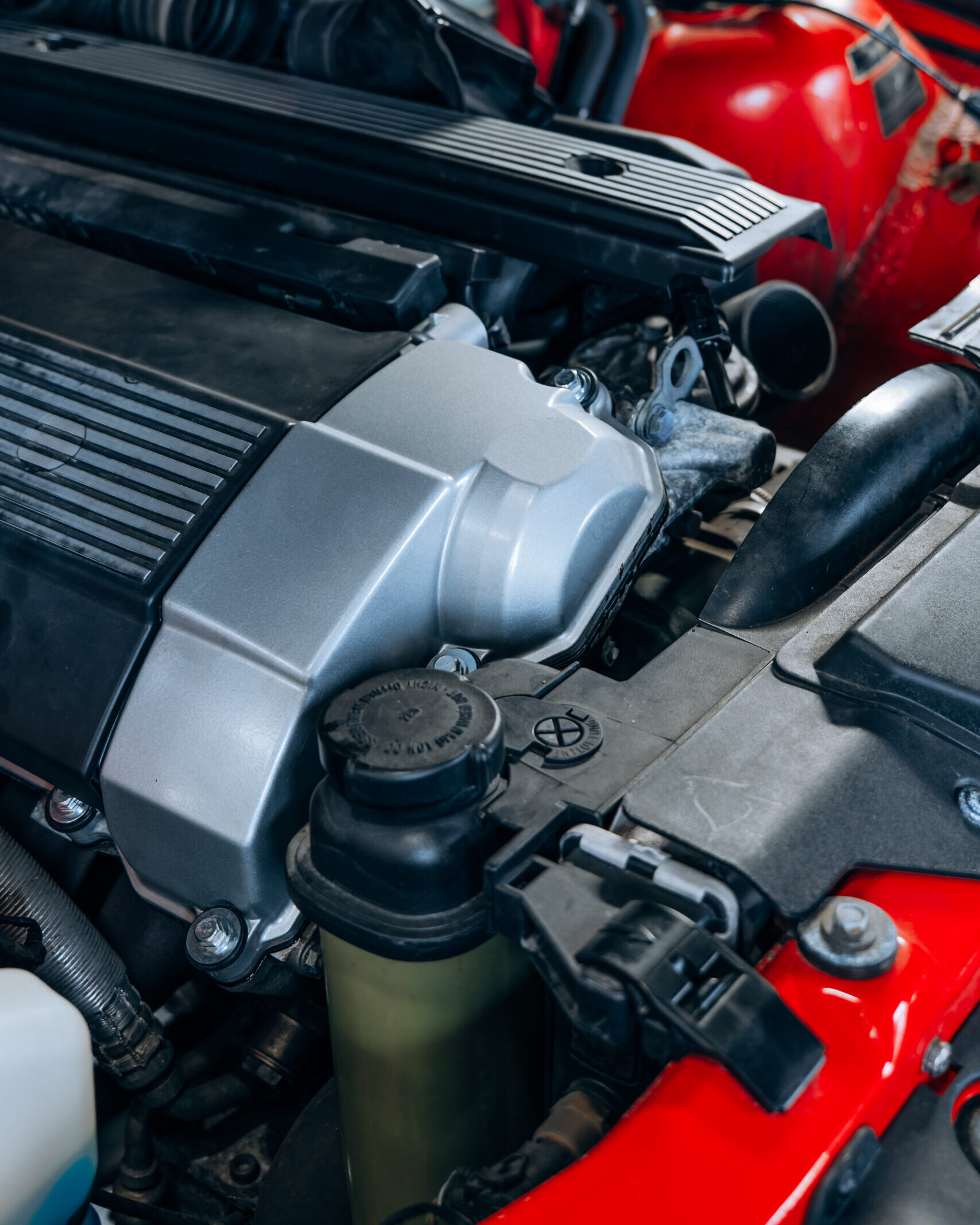
BMW Overheating Diagnosis
A BMW overheating warning should always be taken seriously.
Overheating may occur due to cooling system component failures, including the water pump, heat control module, thermostat, radiator, or cooling fan, as well as coolant leaks, air pockets, or insufficient coolant flow.
Our overheating diagnosis may include:
🔷 Coolant level and leak inspection
🔷 Water pump function testing
🔷 Thermostat operation check
🔷 Radiator and hose inspection
🔷 Cooling fan operation check
🔷 Check for damage, contamination, and corrosion
🔷 Pressure testing where needed
🔷 Fault code scan
🔷 System bleed verification
The goal is to find the actual cause — not just replace parts.
💡 Pro Tip:If your turbocharged BMW (N20, N55, B48, or B58) is overheating, the culprit is often the electric water pump or thermostat. Read our guide to BMW engine overheating: water pump vs. thermostat failure to help pinpoint the cause.
Why Cooling System Repair Matters
BMW engines are sensitive to heat. Ignoring cooling system issues can lead to:
Early diagnosis and repair can help prevent a small cooling issue from becoming a major engine problem.
If overheating has already caused engine damage, our BMW engine repair services can help restore your vehicle’s performance.
Why Choose CG Motorsports
BMW cooling systems require proper diagnosis and repair procedures. At CG Motorsports, you get:
🔷 BMW-specific cooling system expertise
🔷 Experience with electric water pump failures
🔷 Proper coolant bleeding procedures
🔷 Accurate leak and overheating diagnosis
🔷 Stock common failure parts for quicker repairs
🔷 Keep B58/B46 heater modules, hoses, and fittings in inventory
🔷 OEM or equivalent replacement parts
🔷 Richmond-based BMW service
🔷 Honest repair recommendations
🔷 Service for BMW owners across Metro Vancouver
We repair the cause of the issue — not just the symptom.
Related BMW Services
You may also be interested in:


Learn More About BMW Cooling System Issues
Want to understand each cooling system issue in more detail? Read our BMW repair guides:
FAQ
Common signs of BMW water pump failure include an overheating warning, limp mode, a loud cooling fan, a rising engine temperature, reduced coolant circulation, and BMW water pump fault codes.
A normal coolant level does not rule out a failing pump, because the pump may not move coolant effectively. These symptoms can also come from a thermostat, leak, sensor, wiring, or another cooling system problem, so professional BMW diagnosis is recommended, including for BMW maintenance in Richmond, BC.
No. Driving a BMW with a failing water pump or an overheating engine is not recommended because the temperature can continue to rise quickly, turning a cooling system problem into serious engine damage. Continued operation may affect major engine components and increase repair complexity.
Stop driving the vehicle and arrange a professional BMW cooling system inspection and diagnosis so the cause can be identified before further use.
Common signs of a faulty BMW thermostat include overheating, temperature fluctuation, slow warm-up, weak or inconsistent heater performance, check engine light warnings, and cooling system fault codes where applicable. Some BMWs may run too cool, warm up unevenly, or show symptoms only under certain driving conditions.
Because these signs can overlap with water pump, coolant, sensor, or electrical faults, diagnostic testing is needed to confirm whether the thermostat is actually the cause.
They can. BMW water pumps and thermostats can fail together because both manage coolant flow and engine temperature, but one failed component does not automatically prove the other is defective.
During BMW cooling system diagnosis, a technician may inspect both parts along with coolant circulation, leaks, electrical connections, sensors, and related components. The correct repair depends on the BMW model, engine, and test results, so model-specific professional diagnosis is important for BMW cooling system repair and maintenance in Richmond, BC.
BMW coolant leaks are commonly caused by worn hoses, cracked expansion tanks, damaged radiators, failing water pumps, leaking thermostat housings, faulty reservoir caps, heater hoses, or aging plastic cooling system fittings.
The source may be visible as a puddle or residue, but some leaks are hidden and evaporate when hot. A professional pressure test and inspection can locate the problem. The correct repair depends on the BMW model and inspection results.
Common BMW coolant leak symptoms include a sweet coolant smell, visible puddles or residue, repeated low coolant warnings, a low coolant level, overheating, temperature fluctuations, steam, reduced heater performance, or white residue near hoses, connectors, the expansion tank, radiator, water pump, thermostat housing, or other cooling system components.
Some leaks are hidden or evaporate when hot, so the absence of a puddle does not rule out a leak.
These symptoms can have multiple causes, including a faulty sensor, trapped air, a thermostat problem, a water pump issue, or another cooling system fault.
For more detail, review our guide to BMW coolant leak symptoms.
A repeated BMW low coolant warning usually indicates a coolant leak, trapped air, a faulty coolant level sensor, or another cooling system issue. Repeatedly topping up coolant may temporarily clear the message, but it does not fix the underlying cause, and continued driving can lead to BMW overheating.
Professional BMW overheating diagnosis should use model-appropriate testing to identify the fault before the warning is ignored or repairs are selected.
Yes. A BMW coolant leak can cause overheating by reducing coolant volume, introducing air into the cooling system, and disrupting heat transfer or coolant circulation.
Even a small leak can worsen over time and eventually allow temperatures to rise enough to damage engine components. Because overheating warning signs may also result from a water pump, thermostat, radiator, fan, sensor, or other fault, professional BMW cooling system diagnosis is important.
Yes. Bleeding the BMW cooling system after repair is important because trapped air can reduce coolant circulation, cause temperature fluctuations, create poor heater performance, trigger warnings, or contribute to overheating.
A proper bleed helps the repaired system operate as intended, but the procedure varies by BMW model and cooling system design. Professional, model-specific BMW cooling system service is therefore important after repairs involving coolant, hoses, radiators, thermostats, or water pumps.